Choosing the right Smart Motor for global sourcing is not simply a price comparison. It requires careful attention to performance, compatibility, documentation, and long-term supply reliability. A motor that works well in a factory trial may fail when voltage, temperature, or communication standards change across markets. Buyers should examine rated torque, speed range, duty cycle, efficiency, noise levels, and controller compatibility before requesting large quantities.
Small details matter.
For example, a 24-volt motor may suit an automated conveyor, but its connector, firmware, or mounting dimensions might not match existing equipment. Ask suppliers for test reports, sample units, traceable specifications, and clear warranty terms. Independent laboratory results can strengthen confidence, while factory audits may reveal inconsistent assembly practices or weak quality controls. Experience also shows that supplier communication matters. Delayed answers about replacement parts can become expensive production delays later.
Global sourcing adds further pressure. Import requirements, packaging standards, technical files, and regional electrical certifications should be reviewed with qualified professionals. Do not assume one certificate covers every destination. That assumption can be costly. A practical evaluation should compare total ownership cost, not only the purchase price. Include software updates, training, spare motors, customs handling, maintenance tools, and expected service life.
The selection process is rarely perfect. Some suppliers provide impressive samples but weaker production consistency. Others offer dependable engineering but less attractive pricing. A balanced decision combines measured test results, documented supplier experience, and realistic risk assessment. The best Smart Motor is not always the most advanced model. It is the one that performs reliably within your application, supply chain, and operating environment.
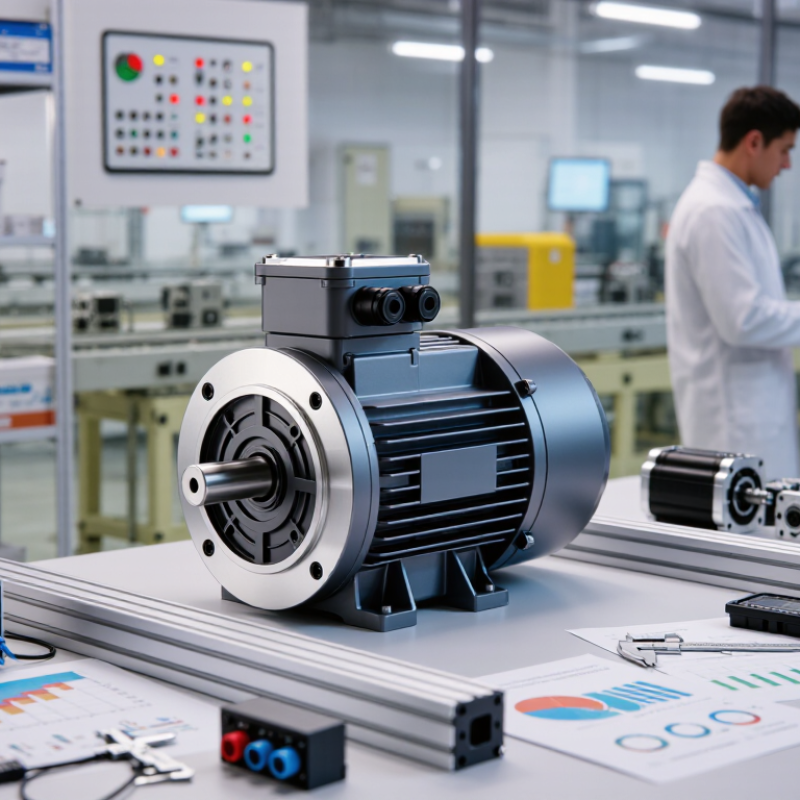
Choosing the right smart motor begins with the application, not the catalog.
Define the motion clearly. Is it continuous rotation, positioning, lifting, or rapid indexing? Record speed, torque, acceleration, and stopping accuracy. A conveyor may need steady torque, while a robotic joint demands quick response and precise feedback. In practical sourcing work, vague requirements often create expensive redesigns.
Measure the real load, including friction, startup force, and unexpected peaks.
Calculate the duty cycle instead of using average demand alone. A motor rated for normal operation may overheat during frequent starts. Leave a sensible safety margin, but avoid excessive oversizing. Oversized motors can waste energy, increase machine cost, and reduce control quality. Test a sample with the actual gearbox, controller, and mechanical load.
The operating environment needs equal attention.
Check ambient temperature, humidity, dust, vibration, and available voltage. A motor used near washdown areas may require stronger sealing. A dusty workshop may need better protection against particle entry. Confirm communication protocols, feedback type, and local electrical requirements before ordering globally. Request test reports, efficiency data, dimensional drawings, and traceable quality records from suppliers. Also verify certifications required in the destination market. Small details matter. One overlooked temperature limit can invalidate an otherwise excellent selection. Recheck assumptions before approving mass production.
Choosing the right smart motor for global sourcing starts with the application, not the catalog.
A brushless DC motor suits compact equipment requiring efficient, quiet operation. An AC motor may perform better in larger machines with steady industrial loads. Stepper motors offer accurate positioning, but they can lose torque at higher speeds. Servo motors provide fast feedback and precise motion, though they usually require more setup and tuning.
Calculate continuous torque, peak torque, and starting torque separately. A conveyor carrying uneven boxes may need strong acceleration torque. A robotic joint may need short peak loads and stable holding force. Add a sensible safety margin, but avoid excessive oversizing. It increases cost and may reduce efficiency. Speed matters just as much. Check the full operating range, not only the maximum rated speed. Low-speed performance is often overlooked.
Control requirements can change the entire sourcing decision. Confirm whether the motor needs pulse control, analog signals, network communication, or closed-loop feedback. Also check encoder resolution, controller compatibility, voltage range, and protection ratings. During supplier evaluation, request test data at your actual load points. Samples can reveal vibration, heat, and noise that specifications hide. I once trusted a generous torque curve and missed the heat buildup during repeated starts. That was a useful mistake. Ask for production consistency, inspection records, replacement parts, and clear technical documents. Vague answers are warning signs.
When I evaluate smart motors for global sourcing, I begin with measured efficiency, not impressive claims. A motor drawing less power can reduce operating costs across thousands of running hours. Ask for efficiency curves at different loads and speeds. During a sample test, record voltage, current, temperature, noise, and vibration. Small errors matter.
Safety needs practical inspection. Check thermal protection, overload response, insulation quality, grounding, and enclosure strength. A supplier should provide test reports, traceable serial numbers, and clear installation instructions. Do not accept vague assurances. I once overlooked heat buildup near a motor’s mounting surface. That mistake changed my evaluation process.
Connectivity must fit the factory network and the maintenance team’s skills. Confirm supported communication protocols, data accuracy, update methods, and access controls. Compatibility extends beyond software. Measure shaft dimensions, mounting holes, torque, voltage, cable paths, and controller requirements before ordering. Leave room for installation differences. Global sourcing also requires checking operating temperature, humidity, packaging quality, and after-sales response. Independent inspection can reveal loose connectors or inaccurate documents. The most polished datasheet is not proof. I still prefer pilot testing under real production conditions, because laboratory results may miss dust, vibration, and inconsistent workloads.
How to Choose the Right Smart Motor for Global Sourcing?
A smart motor must satisfy more than torque, speed, and price requirements. Supplier quality deserves equal attention. Request a factory profile, quality certificates, production records, and recent test reports. Check whether the certificate belongs to the actual manufacturing site. A trading office may not control production.
Ask for traceable samples before placing a large order. Test starting current, noise, heat, vibration, and communication stability. Inspect the motor after continuous operation. Look for loose wiring, uneven coatings, or unclear labels. These small details often reveal weak process control. ISO 9001 can indicate a quality system, but it does not guarantee every shipment is perfect.
Tips: Match certifications to the destination market. Confirm CE, UKCA, FCC, RoHS, or other requirements with a qualified compliance professional. Do not accept copied declarations. Ask for the test laboratory, report date, product model, and applicable standards. Confirm voltage, plug design, wireless frequency, and EMC performance. Keep signed specifications and inspection photos in one file.
Global compliance can change by product version and country. A supplier may provide valid documents for one market, but not another. I have seen buyers focus heavily on certificates and overlook firmware updates. That is a mistake. Software changes can affect safety, radio behavior, and documentation. I still review every detail twice, because a clean-looking file can hide an outdated report. Reliable sourcing requires evidence, independent checks, and honest communication about gaps.
| Verification Dimension | What to Check | Relevant Standard or Requirement | Evidence to Request | Practical Acceptance Benchmark | Priority |
|---|---|---|---|---|---|
| Motor and drive specification | Rated voltage, frequency, output power, torque curve, speed range, duty cycle, insulation class, cooling method, encoder type, and communication interface. | IEC 60034 series for rotating electrical machines; IEC 61800 series when the motor is supplied as part of an adjustable-speed drive system. | Complete datasheet, performance curves, winding data, operating manual, dimensional drawing, and a sample nameplate. | All electrical, mechanical, thermal, and communication parameters are stated consistently across the datasheet, quotation, drawing, and test report. | High |
| Supplier quality management | Documented control of incoming materials, production processes, calibration, nonconforming products, corrective actions, and traceability. | ISO 9001 quality management system; process controls should be appropriate to the motor’s risk and application. | Valid certificate showing the legal manufacturing site and scope, quality manual index, process flow chart, audit summary, and corrective-action records with sensitive information removed. | Certificate scope covers the actual production site and relevant motor or drive activities; critical components can be traced to batch or serial number. | High |
| Electrical safety design | Protection against electric shock, abnormal temperature, insulation breakdown, short circuit, overload, and accessible hazardous parts. | Applicable requirements may include IEC 60034, IEC 61800-5-1, and destination-market electrical safety rules. | Electrical safety test procedure, dielectric-strength test record, insulation-resistance record, protective-earth continuity record, and risk assessment. | Every production unit receives documented safety checks; test voltage, duration, limits, equipment calibration, and operator identification are recorded. | High |
| Ingress protection and mechanical durability | Enclosure resistance to dust, water, cleaning procedures, vibration, shock, corrosion, and mounting loads in the intended environment. | IEC 60529 for IP ratings; applicable environmental and vibration tests should be specified according to the installation conditions. | IP test report, enclosure drawing, seal and bearing specifications, vibration test report, corrosion-test information where relevant, and installation limits. | The claimed IP rating is supported by a test report for the same enclosure design; cable glands, connectors, and mounting orientation are included in the assessment. | High |
| Electromagnetic compatibility | Emissions and immunity of the motor, integrated controller, encoder, wireless module, and associated power electronics. | IEC 61000 series; IEC 61800-3 may apply to adjustable-speed power drive systems; destination-market EMC rules must also be considered. | EMC test report identifying the exact model, hardware revision, cable length, filter configuration, test setup, and test limits. | Testing covers both conducted and radiated emissions plus immunity appropriate to the intended industrial or residential environment. | High |
| Energy efficiency and thermal performance | Efficiency at rated and partial load, power factor, standby consumption, heat rise, continuous torque capability, and derating at high temperature or altitude. | IEC 60034-2-1 and IEC 60034-30-1 may apply to line-operated motors; IEC 61800-9-2 may apply to drive systems. | Efficiency test data, temperature-rise report, derating curves, thermal model or test method, and declared operating limits. | Efficiency claims identify the test point, measurement method, tolerances, controller settings, and whether losses from the drive and accessories are included. | High |
| Materials and restricted substances | Use of restricted substances in electronics, cables, coatings, plastics, solder, magnets, and packaging. | EU RoHS Directive 2011/65/EU and amendments; EU REACH Regulation (EC) No. 1907/2006; other destination-market substance rules may apply. | Supplier material declaration, component-level declarations, laboratory screening where risk is high, Safety Data Sheets, and REACH SVHC communication statement. | Declarations identify the product model and revision; high-risk materials have supporting supplier evidence rather than an unsupported blanket statement. | High |
| Market-access documentation | Whether the product can legally enter and be sold in each target market, including technical files, declarations, labels, and user instructions. | EU CE marking under applicable legislation; UKCA where applicable; United States and Canadian requirements depend on product construction, voltage, installation, and end use. | Declaration of Conformity, technical documentation index, product labels, installation manual, risk assessment, and list of applicable regulations. | Documents refer to the exact model and revision, name the responsible economic operator where required, and match the shipped product and accessories. | High |
| Cybersecurity and connected features | Authentication, access control, secure firmware updates, communication encryption, default passwords, vulnerability handling, and data protection. | IEC 62443 principles may be relevant for industrial automation components; destination-market connected-product and data-protection rules should be reviewed. | Network architecture, interface list, security configuration guide, software bill of materials where available, update policy, vulnerability-reporting process, and penetration-test summary. | Default credentials can be changed, unused interfaces can be disabled, firmware updates are authenticated, and the supplier defines a security-support period. | High |
| Firmware and software control | Version management, backward compatibility, parameter backup, access permissions, diagnostic logs, and change notification. | Supplier-controlled software lifecycle and configuration management; applicable functional-safety requirements must be assessed separately if the motor performs a safety function. | Firmware release notes, version history, parameter map, software license terms, test records, and change-control procedure. | Each shipped unit reports a traceable firmware version; material changes require documented notification, regression testing, and customer approval when contractually required. | High |
| Production testing and quality data | End-of-line checks for no-load current, direction, vibration, noise, torque, temperature, encoder feedback, communication, and safety functions. | Test methods should be based on the applicable IEC product and drive standards and the agreed product specification. | Inspection and Test Plan, sample test records, calibration certificates, statistical process-control charts for critical characteristics, and defect Pareto reports. | Critical tests are performed on every unit or every defined batch; measurement equipment is calibrated and test limits are approved before mass production. | High |
| Factory audit and sample validation | Actual production capability, component storage, ESD controls, assembly discipline, testing facilities, worker training, and segregation of nonconforming products. | ISO 19011 audit principles can support supplier-audit planning; customer-specific audit criteria should be documented. | Remote or on-site audit report, corrective-action plan, pilot-run samples, first-article inspection, and independent laboratory reports where appropriate. | All major findings have owners and due dates; samples are tested under the intended load, duty cycle, temperature, network, and installation conditions. | High |
| Reliability and lifecycle support | Expected service life, bearing and encoder replacement, spare-parts availability, repairability, warranty exclusions, and end-of-life notification. | Reliability claims should be supported by an agreed test plan; environmental management may be assessed against ISO 14001. | Reliability test plan, life-test summary, failure-rate data where available, warranty terms, spare-parts list, repair instructions, and obsolescence policy. | Warranty duration, response times, replacement procedure, spare-parts period, and software-support period are written into the supply agreement. | Medium |
| Supply-chain transparency | Origin and traceability of magnets, semiconductors, bearings, encoders, cables, connectors, and other safety- or performance-critical parts. | Contractual traceability and responsible-sourcing requirements; import, export-control, sanctions, and forced-labor rules depend on the transaction and destination. | Approved vendor list, country-of-origin information, component traceability map, change-notification procedure, and responsible-sourcing declarations. | No unapproved substitution of critical components; changes require prior written notice, impact assessment, sample approval, and updated compliance documents. | High |
| Packaging, shipping, and customs data | Shock and moisture protection, battery or wireless declarations if applicable, export classification, product weight, dimensions, and required import documents. | Incoterms® rules should be stated in the purchase contract; customs classification and transport rules depend on product configuration and destination. | Packing specification, carton test information, commercial invoice data, packing list, country-of-origin statement, tariff-classification proposal, and transport safety documents where applicable. | Shipping documents match the physical goods, serial numbers, quantities, weights, and declared product description; packaging protects connectors, shafts, and electronics. | Medium |
Note: The applicable certification, declaration, test standard, labeling, and import requirements depend on the motor architecture, rated voltage, integrated electronics, intended use, and destination market. Verify the final requirements with a qualified compliance professional before shipment.
Choosing the right smart motor for global sourcing starts with total cost, not the quoted unit price. A motor listed at 180 dollars may require tooling, inspection, freight, insurance, duties, and local delivery. Calculate the landed cost for each destination. Use the same currency and purchasing volume. Small errors can distort comparisons.
Logistics can change the decision quickly. Check motor dimensions, packaging strength, shipping weight, and expected lead time. Confirm required documents and destination certifications before placing an order. Ask how suppliers handle damaged cartons, delayed shipments, and replacement parts. Support matters just as much. Request a written warranty, response-time targets, troubleshooting procedures, and remote diagnostic options. Test communication before production. I once underestimated the cost of one delayed spare part. The factory waited three weeks.
Long-term value requires more than a lower energy bill. Compare energy consumption, duty cycles, maintenance intervals, software updates, and controller compatibility. Calculate ownership costs over three years. Include installation labor and possible downtime. A cheaper motor may need earlier replacement or complicated integration. Ask for a sample and run it under realistic loads, temperatures, and operating hours. A short test is useful, but it cannot predict every field condition. Some assumptions will be wrong. Leave a practical contingency reserve, perhaps five to ten percent, and record which estimates still need verification. Because global sourcing involves changing freight rates, exchange rates, and support capacity, review the calculation before every major purchase.
Five-Year Total Cost Comparison for One 0.75 kW Smart Motor
The model includes purchase price, international logistics and import duty, commissioning, electricity over five years, and maintenance or technical support. It assumes 4,000 operating hours per year, an average electricity price of US$0.12 per kWh, and one motor purchased for industrial equipment. Direct global sourcing may reduce the purchase price, while regional sourcing can lower logistics complexity, commissioning risk, and response time.
Start with the machine’s movement, load, noise limit, and positioning needs. A compact device may suit an efficient, quiet motor. A large machine with steady loads may need a different design. Accurate positioning can favor step-based motion, but torque may drop at high speed. Fast feedback improves precision, though setup becomes more demanding.
Calculate continuous, peak, and starting torque separately. A conveyor with uneven boxes may require strong acceleration torque. A robotic joint may need short peak loads and stable holding force. Add a practical safety margin. Avoid excessive oversizing because it increases cost and wastes energy.
Maximum speed does not describe the entire operating range. Some motors perform poorly when moving slowly under heavy loads. Check torque, vibration, heat, and stability at actual low-speed points. Speed can deceive. Test the difficult range.
Confirm pulse control, analog signals, network communication, or closed-loop feedback requirements. Check encoder resolution, controller compatibility, voltage range, and protection ratings. A motor may meet the torque target but fail during integration. Request wiring diagrams and communication details before sampling.
Request the factory profile, production records, inspection reports, and traceable samples. Confirm that certificates belong to the actual manufacturing site. A trading office may not control production. Inspect wiring, coatings, labels, and connectors after operation. Small defects often expose weak process control.
Match required certifications and safety documents to the destination country and product version. Check the product model, report date, testing laboratory, and applicable standards. Do not rely on copied declarations or unclear files. Firmware updates may change safety, wireless behavior, or documentation. Files can age.
Test starting current, noise, heat, vibration, and communication stability. Operate the sample continuously with realistic loads and temperatures. Inspect it afterward for loose wires, uneven coatings, or damaged labels. A short test reveals useful problems, but it cannot predict every field condition. Test it twice.
Include tooling, inspection, freight, insurance, duties, local delivery, and installation labor. Use the same currency, destination, and order quantity for every comparison. Also estimate maintenance, energy use, software updates, downtime, and replacement parts. Review the calculation before major purchases because freight rates and exchange rates change. Some estimates will be wrong.
Choosing the right Smart Motor for global sourcing begins with a clear understanding of the application, required load, operating speed, duty cycle, and surrounding environment. Buyers should compare motor types, torque characteristics, control methods, energy efficiency, safety features, connectivity options, and compatibility with existing equipment or automation systems. A well-matched motor can improve performance, reduce energy consumption, and support reliable operation across different industrial conditions.
Supplier evaluation is equally important. Review manufacturing quality, testing procedures, certifications, documentation, and compliance with the regulations of each target market. Beyond the purchase price, calculate the total cost of ownership, including transportation, installation, maintenance, spare parts, technical support, and expected service life. By considering performance, compliance, logistics, and long-term value together, companies can select a dependable Smart Motor that supports efficient global operations and reduces sourcing risks.
