What Is a High Efficiency Motor and How Does It Work?

Time:2026-10-18 Author:Ethan
0%

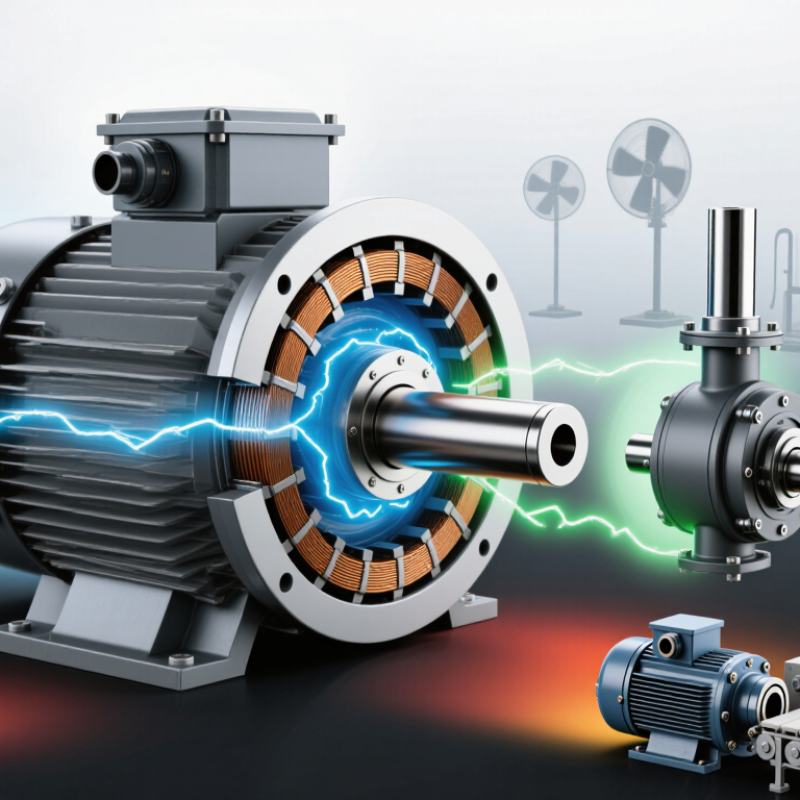
A High Efficiency Motor converts electrical energy into mechanical motion while wasting less power as heat, sound, and friction. It uses carefully designed magnetic circuits, improved bearings, and low-loss electrical materials. Inside the motor, alternating current creates a rotating magnetic field in the stator. This field induces movement in the rotor, which transfers torque to a machine, pump, fan, or conveyor.

The real benefit appears during long operating hours. A motor that runs eight hours daily can reduce electricity use, operating costs, and unnecessary heat around equipment. However, efficiency is not determined by the nameplate alone. Load conditions, voltage quality, alignment, ventilation, lubrication, and speed control also matter. A motor running far below its rated load may not deliver its expected savings.

Details matter.

Engineers commonly compare rated efficiency, power factor, temperature rise, and efficiency-class standards. Measurements from a power analyzer can reveal whether the motor performs as promised in the field. In my experience, installation errors often undermine excellent motor design. A misaligned coupling can create vibration, noise, and bearing wear within months.

This guide explains what a High Efficiency Motor is, how electromagnetic principles make it work, and where energy losses occur. It also considers practical selection, maintenance, and real-world performance. Efficiency claims deserve careful checking. No motor remains efficient when neglected.
What Is a High Efficiency Motor and How Does It Work?

What Defines a High-Efficiency Motor?

What defines a high-efficiency motor? Its efficiency is the useful mechanical power divided by electrical input power. Less energy becomes heat, noise, and vibration. IEC 60034-30-1 classifies motors through IE levels, including IE3 Premium, IE4 Super Premium, and IE5 Ultra-Premium. These ratings depend on standardized testing, rated speed, power, and operating conditions. The International Energy Agency reports that electric motor systems consume roughly half of global electricity. Small efficiency gains therefore matter at enormous scale.

A high-efficiency design uses improved magnetic steel, tighter manufacturing tolerances, better bearings, and reduced rotor losses. The U.S. Department of Energy estimates motor systems use about 70% of industrial electricity in the United States. Yet a premium label does not guarantee maximum savings. Real plants rarely operate at constant full load. Oversized motors may run inefficiently, especially beside throttled pumps or poorly tuned fans. Variable-speed drives can reduce waste, but they also introduce losses and harmonics. This is where specifications become imperfect.

Tips: Check efficiency at the actual duty point, not only the nameplate rating. Compare IE class, load profile, annual operating hours, and maintenance records. Measure current, temperature, and vibration after installation. A cooler motor often suggests lower losses, but temperature alone cannot prove efficiency. Review test certificates against IEC methods, and question unusually optimistic savings claims. The best choice may not be the highest-rated motor; it may be the correctly sized one.

What Is a High-Efficiency Motor and How Does It Work?

What Defines a High-Efficiency Motor?

Motor efficiency is the percentage of electrical input converted into mechanical output. The remaining energy is mainly lost as heat, friction, windage, and electrical resistance. Higher IE classes represent lower losses and better energy performance under rated operating conditions.

Reference data: representative minimum efficiency values for four-pole, 50 Hz motors based on IEC 60034-30-1 efficiency-class thresholds. Actual efficiency varies with motor design, load, voltage, frequency, and operating conditions.

How High-Efficiency Motors Convert Electricity into Motion

A high-efficiency motor turns electrical energy into rotation with fewer losses. Inside the motor, copper windings in the stator receive alternating current and create a rotating magnetic field. This moving field interacts with the rotor, producing torque around the shaft. In some designs, induced currents create the rotor’s magnetic effect; in others, permanent magnetic material supports the motion.

The process sounds simple. It is not. Every stage loses some energy as heat, magnetic hysteresis, air resistance, vibration, and friction in the bearings. High-efficiency designs reduce these losses through tighter winding layouts, improved electrical steel, smoother surfaces, and accurate manufacturing tolerances. A motor controller can also adjust voltage and frequency, matching speed to the actual load instead of running at full power continuously.

Small details matter. A clogged cooling passage can raise winding temperature and increase electrical resistance. Poor alignment may add vibration and waste energy through the coupling. Measuring input power, shaft output, temperature, and operating speed gives a more reliable efficiency picture than relying on a nameplate alone. That point is often missed. Efficiency also changes with load, so a motor performing well in a laboratory may behave differently beside a pump, fan, or conveyor. The calculation remains useful, but real operating conditions deserve closer attention.

Key Components That Improve Motor Efficiency

A high-efficiency motor converts electrical energy into mechanical motion with fewer losses. Its performance depends on several carefully matched components. In field inspections, heat, vibration, and unusual noise often reveal wasted energy before failure appears.

The stator uses thin, insulated steel laminations to reduce eddy-current losses. High-quality copper windings lower electrical resistance and limit heat buildup. The rotor must maintain a precise air gap. Even slight misalignment can increase friction and operating temperature. Efficient bearings support smooth rotation, while suitable seals protect them from dust and moisture. Cooling fins, internal fans, or liquid channels remove heat without consuming excessive power. Heat is the quiet enemy.

A well-designed control system further improves efficiency. Variable-speed control adjusts output to the actual load instead of running continuously at full speed. This matters in pumps, conveyors, and ventilation equipment. Correct voltage, balanced phases, and regular lubrication are equally important. An efficient motor can still waste energy when poorly installed or oversized. This point is easy to overlook. Measurements should guide decisions, including current, temperature, vibration, and loaded speed. No design is perfect. Efficiency may decline as insulation ages or bearings wear. Careful maintenance keeps the motor closer to its intended performance.

What Is a High Efficiency Motor and How Does It Work? — Key Components That Improve Motor Efficiency
Component or Data Dimension How It Works Typical Engineering Data Efficiency Benefit Important Selection Considerations
Motor Efficiency Fundamentals
Motor efficiency The motor converts electrical input power into mechanical output power at the shaft. Efficiency = Output Power ÷ Input Power × 100% Higher efficiency reduces electricity consumption and operating heat for the same mechanical load. Efficiency changes with motor size, speed, load, voltage, frequency, temperature, and operating conditions.
Typical efficiency range Modern three-phase induction motors are designed to reduce electrical, magnetic, mechanical, and stray-load losses. Approximately 85%–97% for many industrial motor ratings A small percentage improvement can produce substantial energy savings during continuous operation. Large motors generally achieve higher full-load efficiency than small motors because fixed losses represent a smaller share of output power.
Loss categories Input power is reduced by stator copper loss, rotor loss, core loss, friction, windage, and stray-load loss. Total loss = Input Power − Output Power Efficient designs minimize each loss category instead of relying on one component alone. Losses increase when the motor is overloaded, poorly ventilated, incorrectly aligned, or operated far below its design point.
Key Components That Improve Efficiency
High-grade electrical steel laminations Thin insulated steel sheets form the stator and rotor cores, limiting circulating currents and magnetic hysteresis. Laminate thickness commonly ranges from about 0.25–0.65 mm Reduces core losses, especially at higher electrical frequencies and speeds. Material grade, thickness, insulation quality, and manufacturing pressure affect magnetic performance.
Stator windings Three-phase windings create a rotating magnetic field that transfers electrical energy into electromagnetic torque. Copper resistance loss follows P = I²R More conductor area and shorter winding end turns can reduce resistance and heat generation. Correct voltage, phase balance, winding layout, and insulation temperature rating are essential.
Rotor design In an induction motor, currents induced in the rotor interact with the rotating stator field to produce torque. Rotor losses rise with slip and load Optimized rotor bars, low-resistance paths, and accurate rotor geometry reduce rotor losses. Rotor design must balance efficiency, starting torque, acceleration current, and speed regulation.
Air gap The small clearance between the stator and rotor allows rotation while enabling magnetic coupling. Typically designed as a small fraction of the motor radius A properly controlled air gap reduces magnetizing current and improves power factor. An air gap that is too large increases reactive current; one that is too small can create mechanical contact risks.
Bearings Bearings support the shaft and allow the rotor to turn with low mechanical resistance. Bearing condition directly affects friction and vibration Low-friction, correctly lubricated bearings reduce mechanical losses and operating temperature. Alignment, lubrication quantity, contamination, load, and replacement intervals must be controlled.
Cooling system and fan Fans, frames, and ventilation paths remove heat produced by electrical and mechanical losses. Insulation systems are commonly rated for temperature classes such as 130, 155, or 180°C Lower winding temperature improves insulation life and helps maintain stable efficiency. Blocked airflow, high ambient temperature, or oversized fan power can reduce overall system efficiency.
Low-resistance electrical connections Terminals, joints, and conductor connections transfer current between the supply and windings. Connection heating increases approximately with I²R Secure, clean, and correctly sized connections prevent avoidable voltage drop and heat loss. Loose terminals, oxidation, undersized cables, and phase imbalance can cause overheating.
Motor frame and magnetic circuit The frame supports the active parts and helps maintain precise alignment of the stator and rotor. Rigid construction helps limit vibration and mechanical misalignment Stable geometry supports consistent air-gap performance and reduces mechanical losses. Mounting stiffness, foundation quality, shaft alignment, and environmental protection rating affect reliability.
Operating Conditions That Affect Efficiency
Load factor Load factor compares actual mechanical output with rated motor output. Load factor = Actual Load ÷ Rated Load × 100% Motors often operate most efficiently near their intended load range rather than at very light load. Oversizing a motor can increase fixed-loss percentage and reduce efficiency at the normal operating point.
Power factor Power factor indicates how effectively the motor converts apparent electrical power into useful active power. Power factor = Real Power ÷ Apparent Power A higher power factor reduces reactive current and lowers upstream cable and transformer losses. Power factor varies with motor design, load, voltage, and the use of power-factor correction equipment.
Variable-frequency drive operation A drive adjusts frequency and voltage to control motor speed and match output to changing process demand. System efficiency includes both motor and drive losses Speed control can significantly reduce energy use in variable-torque loads such as pumps and fans. Drive efficiency, switching frequency, harmonics, cooling, cable length, and motor compatibility must be evaluated.
Voltage and phase balance Balanced three-phase voltage produces a more uniform rotating magnetic field. Voltage imbalance should be kept as low as practical Balanced supply conditions reduce negative-sequence currents, overheating, vibration, and torque pulsation. Measure voltage at the motor terminals, not only at the distribution panel, especially on long cable runs.
Maintenance condition Cleaning, lubrication, alignment, and electrical testing preserve the motor's designed operating characteristics. Monitor temperature, vibration, current, insulation resistance, and energy use Preventive maintenance limits additional friction, overheating, unbalanced current, and premature failure. Maintenance intervals should reflect operating hours, duty cycle, environment, load severity, and manufacturer instructions.
Efficiency Classification Reference
IE efficiency classes International efficiency classes provide a standardized method for comparing motor energy performance. IE1: Standard; IE2: High; IE3: Premium; IE4: Super Premium; IE5: Ultra Premium Higher classes generally use improved materials, optimized electromagnetic design, and reduced losses. Exact minimum efficiency values depend on rated power, number of poles, frequency, and the applicable standard edition.
Payback potential Energy savings depend on the efficiency difference, operating hours, load profile, and electricity price. Annual energy saving = Power Reduction × Operating Hours Continuous-duty applications usually offer the greatest opportunity for efficiency-related cost savings. Evaluate the complete motor system, including controls, transmission, pumps, fans, compressors, and maintenance costs.
Technical note: Efficiency figures are typical engineering ranges and general reference values, not guaranteed ratings for a specific motor. Actual performance should be verified from certified test data under the required voltage, frequency, speed, load, ambient temperature, and installation conditions.

How Motor Efficiency Is Measured and Classified

What Is a High Efficiency Motor and How Does It Work?

How Motor Efficiency Is Measured and Classified

A high efficiency motor converts more electrical power into useful mechanical output. It reduces losses in copper windings, the iron core, bearings, and airflow. During operation, magnetic fields create torque inside the stator and rotor. Less wasted energy usually means lower heat, quieter running, and reduced operating costs.

Engineers measure efficiency by comparing mechanical output power with electrical input power. The basic calculation is efficiency equals output divided by input, multiplied by 100. Testing normally records voltage, current, speed, torque, and temperature under defined load conditions. A motor producing 7.5 kilowatts mechanically may consume slightly more electrical power. Its efficiency changes with load, voltage balance, frequency, and temperature. International classifications commonly range from IE1 to IE5, with higher classes indicating lower tested losses. However, the classification depends on motor type, rated conditions, and the test method. Field performance can differ from laboratory results. That detail is easy to overlook.

Tips: Check the efficiency value at your actual operating load, not only at full load. Keep terminals tight and cooling passages clean. Measure current on all phases. An uneven reading may reveal imbalance, overload, or a connection problem. For a practical comparison, record energy use before and after replacement. A meter reading beside a warm control cabinet often explains more than a brochure.

Applications, Benefits, and Operating Considerations

A high efficiency motor converts electrical power into mechanical motion with reduced losses. It uses improved magnetic materials, tighter manufacturing tolerances, and better cooling paths. Current creates a rotating magnetic field inside the stator. This field drives the rotor and turns the connected shaft. Less energy becomes heat during this process.

These motors serve pumps, fans, compressors, conveyors, and machine tools. They are especially valuable in facilities operating equipment for long hours. Lower losses can reduce electricity use and heat around the motor. A cooler motor may also experience less insulation stress over time. In practical maintenance work, energy savings become clearer when motors run continuously. Short duty cycles may produce smaller financial gains.

Operating conditions still matter. Correct sizing is essential because an oversized motor can run inefficiently at light loads. Voltage imbalance, poor alignment, blocked ventilation, and frequent starts can increase losses. Dust can restrict airflow around the cooling housing. A technician should check vibration, temperature, current, and bearing noise during inspections. Efficiency ratings are useful, but they do not reveal every site condition. A calculation based only on the nameplate may mislead. Real performance changes with load, speed control, ambient temperature, and maintenance quality. The motor may be efficient, yet the entire drive system may waste energy.

FAQS

What makes a motor efficient?

It converts more electrical energy into shaft motion and loses less energy as heat. Thin laminations, copper windings, precise gaps, and effective cooling help.

How do stator laminations reduce energy loss?

Thin, insulated steel layers reduce unwanted eddy currents inside the stator. Less internal current means less heat.

Why are copper windings important?

High-quality copper creates lower electrical resistance. This helps limit heat buildup during long operating periods.

How can air-gap problems reduce efficiency?

A misaligned rotor can increase friction and temperature. Even a small gap problem may waste energy continuously.

Which equipment can benefit from efficient motors?

Pumps, fans, compressors, conveyors, and machine tools can benefit. Long-running equipment usually offers clearer energy savings.

Can a highly rated motor still waste energy?

Yes. Incorrect sizing, poor alignment, blocked airflow, and voltage imbalance can reduce real performance. Ratings do not show every site condition.

What measurements should technicians check?

They should check current, temperature, vibration, bearing noise, and loaded speed. A warm housing deserves attention.

Does variable-speed control improve motor efficiency?

It can adjust output to the actual load instead of running continuously at full speed. Results depend on the whole drive system.

How does maintenance preserve efficiency?

Regular lubrication, clean cooling paths, and suitable seals support smooth operation. Efficiency still declines as insulation and bearings age.

Are energy savings always financially significant?

No. Long duty cycles usually create larger savings, while short operating periods may produce smaller gains. The estimate may be imperfect.

Conclusion

A High Efficiency Motor is designed to convert electrical energy into mechanical motion with minimal waste. It achieves this through improved magnetic materials, optimized winding designs, reduced electrical resistance, and carefully engineered bearings and cooling systems. When electricity enters the motor, it creates a rotating magnetic field that interacts with the rotor, producing torque and driving connected equipment. Efficient construction helps reduce energy lost as heat, vibration, and friction during operation.

Motor efficiency is measured by comparing mechanical output power with electrical input power and is commonly classified into established efficiency levels. Higher-efficiency motors can lower energy consumption, reduce operating costs, and support more reliable performance in applications such as pumps, fans, conveyors, compressors, and industrial machinery. However, selecting the right motor also requires attention to load conditions, speed, duty cycle, ventilation, maintenance, and control methods. Proper sizing and regular inspection are essential to ensure that efficiency benefits continue throughout the motor’s service life.

Ethan

Ethan

Ethan is a seasoned marketing professional with a deep expertise in our company's innovative product line. With a passion for sharing knowledge and insights, he takes the lead in regularly updating our corporate blog, where he explores industry trends, product features, and effective marketing......